My brother gifted me a Diamond Back Ascent in the early 90s, I remember it was snowing when he dropped it off, but literally overnight the world opened up to me. My range expanded from the adjacent cul‑de‑sacs and estates to neighboring woods, forests, quarries, towns and cities. The roads were always narrow and never particularly safe, so I usually stuck to the pavements, which wasn’t technically allowed. In the end though, I found myself drawn to the local canal system, what we colloquially called the cut.
Back then I lived close to the Wyrley & Essington Canal which ran through the remnants of industries that had once relied on the delivery of cheap coal. The neglected towpaths always ran beside shuttered factories and half‑collapsed brickworks, and a mountain bike made easy work of the decay. Everyone seemed to know their local stretch of the cut, but the scale and interconnection of the national network wasn’t always obvious. I would ride for miles without seeing anyone, surrounded by a mix of green countryside and abandoned Black Country.
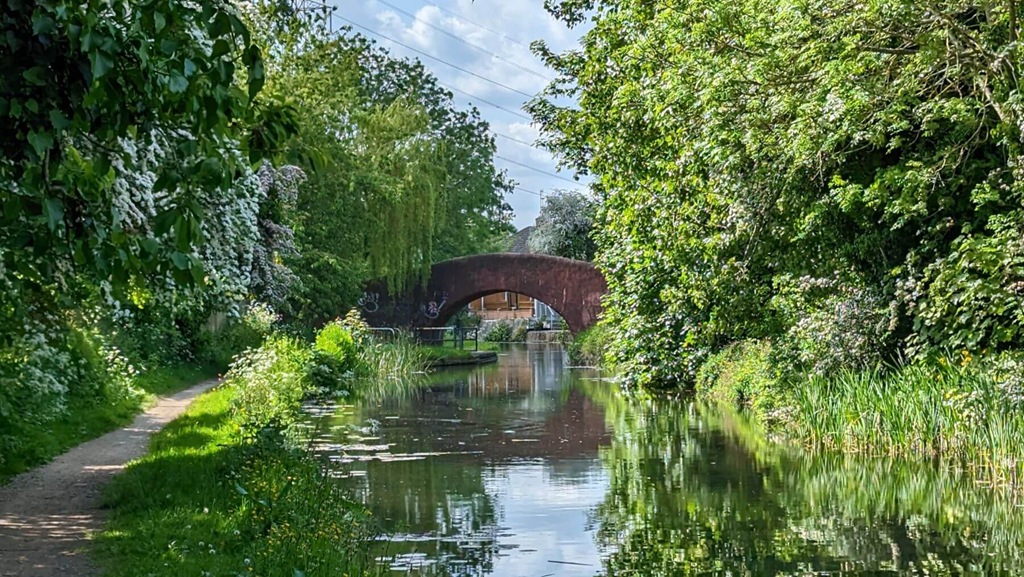
Some weekends I’d wake up early and follow the cut out toward Rough Wood, letting the narrow towpath guide me through the quiet stretches behind nearby estates while also reveling in the occasional curated canal facing private garden. It felt like a portal to another world, in fact it would be years before I even knew how to get to Rough Wood via car or public transport.
Every now and then I’d push farther to the west side of town toward Aldersley Stadium, now known as Wolverhampton & Bilston Athletics Club. The route was something I built slowly, threading together stretches of the Wyrley & Essington, the Old Main Line, and the Staffordshire & Worcestershire Canal. None of it was signposted or obvious. Looking back, I’m still not sure how I figured it out, it was just the path that emerged after enough weekends spent exploring the cuts.
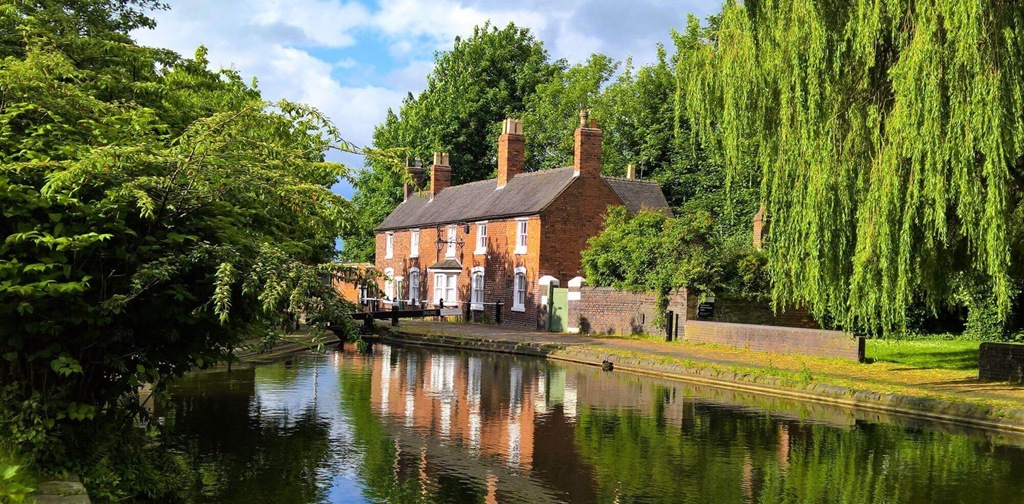
During my time in Birmingham as a student at UCE (now Birmingham City University), I was often short of money for public transport, so I fell back on the canals to get me from one part of the city to another. Birmingham is said to have more miles of canal than Venice, but back then the comparison would have been purely academic, the network was rough, functional at best, and mostly overlooked. I would bike from my place in Moseley, south of the city, join the Grand Union Canal, follow it into the Birmingham and Warwick Junction Canal, and then take the Tame Valley Canal out toward Perry Barr on the north side. It was a quiet thread through a growing city, a route I stitched together systematically using old an AA Road Atlas, only slipping onto the congested streets when the towpath ended or had been reclaimed by the remnants of industry.
Of course a lot has changed since the 90s. The towpaths that were once muddy, uneven, and forgotten have been resurfaced and lit. The canals are now deliberate public spaces, and the transformation is even more striking in Birmingham. Warehouses have become apartments, factories have become cafés, and these once‑neglected corridors have shifted into a welcoming centerpiece. It’s hard to reconcile that with the rough routes I used to ride.
Today my wife and I walk and bike along our two rivers in Columbus, the Scioto and Olentangy, they converge conveniently in the heart of the city. It often brings the memory of those old canal rides back to me, while the cut may look different now, the sense of freedom they originally gave me hasn’t faded. They were the first places that let me move through a town on my own terms, and I’m eager to see how those old routes feel when I finally return to Birmingham.
Comments are closed.